Skip to content

Two containers may use the same tinplate material but require different thicknesses. For food packaging, the thickness typically ranges from 0.15 mm to 0.30 mm. But choosing thickness for the can is not simply picking 0.18 mm, 0.20 mm, or 0.23 mm. Your goal is a specification with enough strength and forming stability without unnecessary cost. The thickness of tinplate, along with tinplate material thickness, must never be selected independently from temper, mechanical properties, can design, and forming process. How to choose tinplate thickness for food cans for tinplate packaging requires balancing these factors for your specific food packaging cans.
Key Takeaways
- Tinplate thickness affects production speed, can strength, and total cost.
- No single thickness fits all cans; consider size, shape, and food type.
- Thickness alone does not equal strength; temper and mechanical properties matter.
- Thinner tinplate can cut material costs but may increase scrap and downtime.
- Evaluate real savings by comparing total cost per 1,000 usable cans.
- Safely reduce thickness by documenting specs, assessing margins, and running trials.
- Too-thin tinplate risks panel deformation and food safety; too-thick wastes money.
- Share complete can details with your supplier for accurate recommendations.
Why Tinplate Thickness Matters in Food Can Production
The thickness of tinplate you select touches every part of your operation. It determines how smoothly your line runs, how well your finished cans perform, and what each thousand cans costs you. Understanding these three connections helps you make a specification decision based on data, not habit.

Impact on Production Efficiency
Your production line feels thickness changes immediately. Forming, flanging, seaming, and welding all respond to the material you feed them. A thickness that suits one process may cause trouble in another. For example, three-piece can bodies need material that welds cleanly and flanges without cracking. Two-piece drawn cans require tinplate that flows evenly through the die without thinning at the wall.
Line stability depends on consistent tinplate material thickness. When the gauge varies across the width of the coil or from one coil to the next, your machines need constant adjustment. Each adjustment costs you running time. Each rejected can costs you material. A material that runs smoothly at 400 cans per minute may force you to slow down to 350 if the thickness fluctuates. That 12.5 percent speed loss directly reduces your output.
Impact on Finished Can Performance
The tinplate thickness you choose also determines how your finished cans behave through filling, retorting, handling, and transport. Panel strength, dent resistance, and axial strength all trace back to this single specification. A can that feels sturdy on the production line may deform under stack pressure in a warehouse or dent during shipping.
Food packaging cans must protect their contents through a demanding journey. The can leaves your facility, travels to a filler, undergoes thermal processing, sits in distribution, and finally reaches a retailer. At every step, the container faces mechanical stress. If the thickness of tinplate falls too low for the can diameter, you risk panel deformation. If it falls too low for the stacking load, you risk buckling. These failures compromise food safety because damaged cans can expose the product to contamination.
Impact on Total Material Cost
Thickness directly controls steel consumption. A reduction from 0.22 mm to 0.20 mm cuts roughly 9 percent of the steel weight per can. Multiply that across millions of cans, and the savings look substantial. But here is the critical point: the lowest-cost tinplate is not necessarily the thinnest tinplate.
Overly thin material can increase scrap rates, create forming instability, and force more line adjustments. It can lead to can deformation and customer complaints. When you add these costs together, the total production cost may actually rise. Tinplate packaging economics require a full view. You must compare material price per ton against total cost per 1,000 usable cans, including waste and downtime. For food packaging, reliability matters more than marginal savings. A specification that runs consistently and protects the product delivers better long-term value than the cheapest option on paper.
How to Choose Tinplate Thickness for Food Cans: Common Ranges
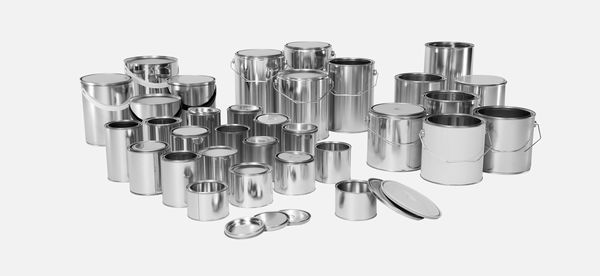
Food-can tinplate is commonly supplied in thin gauges, but no single thickness suits every food can. How to choose tinplate thickness for food cans depends on the component and its function. The reference table below gives you a starting point, not a final specification. You must validate your choice against your actual can design and production line.
Typical Thickness Ranges for Food Can Components
Different parts of a food packaging can need different thicknesses. The body, the end, and the easy-open end each serve a distinct purpose. Here are typical ranges based on industry practice:
| Can Component or Application | Typical Thickness Range (mm) |
|---|---|
| General food packaging cans (3‑piece body) | 0.18 – 0.26 |
| Tall food / industrial cans | 0.24 – 0.32 |
| Large cans (>5 liters) | > 0.25 |
| Standard can ends (non-easy-open) | 0.17 – 0.26 |
| Easy-open ends (e.g., 401 diameter EOE) | 0.19 – 0.22 |
| Ordinary beverage cans / candy boxes | 0.15 – 0.20 |
The chart shows how required thickness varies across applications. Tall industrial cans need a thicker material, while beverage cans use thinner gauges. The thickness of tinplate must match the mechanical demands of each component. A mismatch leads to production problems or product damage.
For standard can ends, the manufacturer specifies a typical tinplate thickness range of 0.17–0.26 mm. This depends on the end’s diameter, temper level, profile design, and required performance. For easy-open ends, specifically 401 diameter EOE in canned food, the tinplate material thickness can be customized within 0.19 mm to 0.22 mm. These numbers show that you cannot treat all components the same way. The body and the end of the same food packaging can may require different specifications.
Why a Universal Thickness Chart Is Not Recommended
A universal chart with one recommended thickness for all food packaging would be misleading. The right tinplate material thickness for your product depends on several variables that a simple chart cannot capture.
Can diameter, height, and shape all influence the required gauge. A thickness that works for a small seafood can may cause panel deformation in a large vegetable can. Forming method matters too. Two-piece drawn cans need material that flows evenly through the die. Three-piece welded cans need material that flanges and seams without cracking.
Production line speed and tooling condition also affect the choice. The same material may run smoothly on one press but cause trouble on another. Your current issues, such as cracking or denting, may point to the need for a different thickness or temper.
So how to choose tinplate thickness for food cans? Start with the reference ranges above, then validate your specification against your actual can design and production line. Test the material under real conditions. Only then will you know whether the thickness is right for your tinplate packaging.
Key Factors in Tinplate Selection for Food Cans
Seven factors determine the right tinplate material thickness for your food packaging cans. Each one interacts with the others. You cannot evaluate thickness alone. You must consider the complete picture before you place your next order.
Can Size and Diameter
Can diameter drives your thickness decision more than any other dimension. A larger diameter means more unsupported surface area. That area must resist panel deformation when internal pressure changes during retorting. It must also resist denting during handling and transport.
Consider two cans with identical height. One measures 52 mm in diameter. The other measures 153 mm. The smaller can may perform perfectly at 0.18 mm. The larger can at the same thickness would flex, buckle, and deform under normal stacking loads. You would need a substantially thicker material for the larger diameter.
Can height matters too. Taller cans experience greater axial loads at the bottom of a stack. The sidewall must resist buckling without collapsing. Can shape also plays a role. Round cans distribute stress evenly across their circumference. Square or rectangular cans concentrate stress at corners and flat panels. These shapes require greater thickness of tinplate to withstand the same internal pressure.
Two-Piece vs. Three-Piece Can Manufacturing

Your forming process determines which tinplate properties you need. Three-piece cans start with a flat sheet that you roll into a cylinder and weld along the side seam. The material must weld cleanly without spattering. It must flange without cracking at the edges. It must seam properly when you attach the ends.
Two-piece cans undergo drawing. A flat blank gets pushed into a die to form the body and bottom in one piece. This process stretches the metal significantly. The tinplate must flow evenly without thinning excessively at the sidewall. Deep draws require material with higher ductility. The bottom structure of a drawn can also needs sufficient strength to resist panel reversal under pressure.
The same nominal thickness does not guarantee the same forming performance across these different processes. A 0.20 mm tinplate that works flawlessly in a three-piece welded line may crack or tear in a two-piece drawing operation. You must match the material to your specific manufacturing method.
Tinplate Temper and Mechanical Properties
Thickness does not equal strength. This distinction matters more than any other concept in tinplate selection. Two suppliers may both offer 0.20 mm tinplate. One supplies Temper T1. The other supplies Temper T4. These materials behave completely differently on your production line.
Temper refers to the hardness and mechanical properties of the steel after processing. Lower temper grades offer better formability. They bend and draw more easily. Higher temper grades offer greater stiffness and strength. They resist denting and deformation better but crack more readily during forming.
The impact of thickness on strength depends heavily on temper. A thin sheet with high temper may outperform a thicker sheet with low temper in terms of panel rigidity. You must specify both thickness and temper together. Ask your supplier for the complete tinplate properties, not just the gauge. Refer to a tinplate temper chart to understand how different grades compare.
Single-Reduced vs. Double-Reduced Tinplate
Tinplate comes in two main forms based on how manufacturers process the steel. Single-reduced (SR) tinplate undergoes one cold rolling pass. It offers excellent formability and ductility. Double-reduced (DR) tinplate receives a second cold rolling pass. This additional processing increases strength significantly.
DR tinplate enables gauge reduction. You can use a thinner material while maintaining the same strength as a thicker SR sheet. This creates a key purchasing question: Can we reduce thickness by switching from SR to DR tinplate without affecting production stability? The answer depends on your forming process. DR tinplate has lower ductility. Deep drawing operations may struggle with it. Three-piece welding and simple flanging often handle DR material well.
Food Type and Filling Process
The food product inside your can influences your complete material specification. Acidic foods such as tomato products and pickled vegetables require thicker tinplate. Industry research shows highly acidic foods need approximately 0.20 mm to 0.30 mm to resist corrosion. Non-acidic foods like beverages and candy can use thinner material from 0.15 mm to 0.20 mm.
Food acidity primarily affects the tin coating and internal lacquer requirements. It does not directly determine the steel base thickness. However, you must consider the complete specification together. Seafood products demand attention to corrosion resistance and sulfur-containing compounds. Retorted foods require container integrity through thermal processing. The filling process also matters. Hot filling creates internal pressure that your can body must withstand.
Can Body vs. Can End
Do not treat can body and can end specifications as interchangeable. Each component faces different mechanical demands. The body must handle welding, flanging, and axial compression during stacking. The end must withstand pressing, curling, and seaming operations. It also resists internal pressure from the food product.
Easy-open ends add another layer of complexity. The score line must be precise. The opening performance depends on material strength and temper. A thickness that works for the body may be wrong for the end. Evaluate each component separately.
Production Line Speed and Tooling
Your specific equipment determines how any tinplate performs. The same material may run smoothly on one press but cause constant problems on another. Tooling condition, line speed, and machine setup all affect forming behavior. When you request a recommendation from your supplier, share your current thickness, temper, can dimensions, production process, and any existing material problems. This information helps them identify the right specification for your operation.
Is Thinner Tinplate Always the Right Cost Choice?
The pressure to cut material costs pushes many manufacturers toward thinner gauges. Reducing thickness lowers steel consumption per can. That logic seems simple. But the full cost picture tells a different story. You must weigh material savings against everything that can go wrong on your production line.
The Hidden Costs of Over-Thinning
When you specify a thinner tinplate material thickness, you trade one cost for another. The material itself costs less. Yet the risks multiply. Overly thin tinplate may not withstand your forming process. It can crack during flanging. It can tear during drawing. It can deform during seaming.
These failures create scrap. Each rejected can wastes not just the tinplate but also the energy, labor, and machine time invested in it. Your line may slow down as operators adjust settings to compensate for the thinner material. You may face more frequent stoppages to clear jams or replace damaged tooling.
Panel deformation becomes a real threat with thinner gauges. Food packaging cans must hold their shape through retorting and stacking. A can that dents easily may fail under warehouse loads. Customers reject damaged food packaging. Retailers return unsold product. Your brand suffers.
Welding instability also appears with thinner material. Three-piece can bodies need consistent weld quality. Thin tinplate can burn through or create weak spots. Seaming problems follow. The end hook may not form properly, compromising the hermetic seal that keeps food safe.
The hidden costs accumulate quickly. Higher scrap rates. More downtime. Increased rejects. Customer complaints. When you add these expenses, the total production cost may exceed what you paid before the gauge reduction. The cheapest tinplate per ton can become the most expensive option per usable can.
Calculating Real Savings: A Practical Formula
You need a clear method to evaluate any proposed gauge reduction. Use this simple relationship: Material Saving minus Additional Scrap minus Downtime minus Reject Cost equals Real Saving. Each term must come from actual production data, not estimates.
Start with material saving. Calculate the weight difference between your current thickness of tinplate and the proposed thinner gauge. Multiply by your annual volume and the price per ton. This gives you the gross saving. Then measure the real impact on your line. Run a trial batch. Track scrap percentage before and after the change. Record downtime minutes. Count rejected cans.
The comparison table below shows why you must look beyond the purchase price.
| Purchasing Metric | Better Evaluation |
|---|---|
| Price per ton | Cost per 1,000 cans |
| Nominal thickness | Actual thickness consistency |
| Cheapest material | Lowest total production cost |
| Thickness only | Thickness + temper + mechanical properties |
| Supplier quotation | Material + scrap + downtime + yield |
| Single sample | Trial + batch consistency |
Gauge reduction should be validated by production trials, not purchasing price alone. A trial reveals how the tinplate behaves on your specific equipment. It shows whether your food packaging cans maintain their strength. It tells you if the thinner material can handle your filling and retorting processes.
Work with your supplier to design a proper trial. Test forming, welding, flanging, and seaming. Measure can strength and panel rigidity. Compare the total cost per 1,000 usable cans, not just the material price. This approach protects your food packaging quality while pursuing legitimate savings. The right decision balances cost reduction against production reliability and food safety.
How to Safely Reduce Tinplate Thickness
Gauge reduction offers real savings, but you must approach it methodically. A structured process protects your production line and your food packaging quality. Follow these five steps to evaluate whether a thinner tinplate material thickness works for your operation.
Step 1: Document Your Current Specification
You cannot change what you have not measured. Start by recording your complete current specification. Note the thickness of tinplate you use today. Write down the temper grade, whether T1 through T5 or a DR classification. Document the tin coating weight on each side. Record the surface finish, bright or stone. Identify the steel grade and any mechanical property requirements your supplier certifies.
This documentation becomes your baseline. It tells you exactly where you stand before you consider any change. Without it, you cannot compare alternatives fairly. You also need this information when you talk to your supplier about options. A complete specification helps them recommend a thinner gauge that still meets your forming and performance needs.
Step 2: Assess Performance Margins
Your current material may have more strength than your application requires. Many manufacturers over-specify out of caution. They choose a thicker gauge because it worked in the past, not because the can design demands it. You need to identify that excess margin.
Look at your actual production data. How often do you see panel deformation or denting? If these problems rarely occur, your current tinplate may have room for reduction. Examine your retorting conditions. Do your cans experience high internal pressure? If not, you may not need the extra stiffness. Review your stacking and transport requirements. Short distribution chains put less stress on cans than long international shipping routes.
Ask yourself whether your current specification protects against real risks or imagined ones. This assessment tells you how much margin you can safely give up. It also highlights which performance properties you must preserve.
Step 3: Evaluate Higher-Strength Tinplate Options
Switching from single-reduced to double-reduced tinplate often enables gauge reduction. DR material receives an additional cold rolling pass. This process increases strength without changing the chemistry of the steel. You may achieve the same panel rigidity with a thinner sheet.
However, do not assume DR tinplate is a direct replacement. The additional rolling reduces ductility. Deep drawing operations may struggle with DR material. Flanging and seaming require careful evaluation. Your forming process determines whether DR tinplate can work for your food packaging cans.
Compare the tinplate properties of your current SR material against candidate DR grades. Look at yield strength, tensile strength, and hardness. Consider how these differences affect your specific forming operations. Your supplier can provide comparison data. Use that information to shortlist viable options before you commit to a trial.
Step 4: Run Production Trials
A paper comparison cannot replace real production testing. Run a trial batch with the candidate thinner tinplate. Use your actual production line, not a laboratory setup. Test every stage of your process.
Start with forming. Watch how the material draws, bends, or welds. Check for cracking, tearing, or thinning at critical points. Move to flanging and seaming. Inspect the joints for consistency and integrity. Measure can strength after forming. Test panel rigidity and dent resistance. If you use retorting, run filled cans through your complete thermal process.
Track scrap rates during the trial. Count rejected cans. Record any line stoppages or speed reductions. These numbers tell you whether the thinner material can sustain your production efficiency. A trial that produces perfect cans at half your normal speed does not represent a viable solution.
Step 5: Compare Total Cost per 1,000 Cans
The final decision comes down to economics. Calculate the total cost per 1,000 usable cans for your current material and for the trial material. Include the material price per ton. Add the cost of scrap. Factor in downtime and labor. Count rejects and rework.
This comparison reveals the true impact of gauge reduction. A thinner tinplate that costs less per ton may cost more per usable can if scrap rates rise. Conversely, a slightly more expensive material that runs cleanly may deliver the lowest total cost. Your food packaging cans must meet quality standards. The cheapest option on paper fails if it produces damaged containers.
Gauge reduction should be validated by production trials, not purchasing price alone. The five-step process gives you the evidence you need. It protects your food packaging quality while pursuing legitimate savings. It ensures any thickness reduction you implement maintains the strength and reliability your customers expect.
What Happens When Tinplate Thickness Is Wrong?

Risks of Tinplate That Is Too Thin
Choosing a gauge that is too thin for your application creates real problems. The most visible issue is panel deformation. Depending on your can design and material properties, the sidewall may flex inward or outward when internal pressure changes during retorting. This flexing can create permanent dents that ruin the appearance of your food packaging.
Denting and buckling also become more likely. Thin sidewalls cannot resist the same stacking loads as thicker ones. Your cans may collapse under the weight of pallets during storage or transport. Handling damage increases as well. Operators and automated equipment can dent thin cans more easily. Every damaged can represents wasted material, labor, and energy.
Forming instability is another major risk. Tinplate that is too thin may not feed properly through your forming equipment. It can wrinkle during drawing. It can crack during flanging. It can fail during seaming. These failures reduce your process margin. You have less room for error in your production line. Small variations in tooling wear or material properties can push your yield down sharply.
The impact on food safety is indirect but serious. A damaged can may not seal properly. Contaminants can enter the food packaging. The product inside may spoil. Thinner material also offers less protection against corrosion over time. Your food packaging cans must maintain their integrity through the entire shelf life. Too-thin material puts that integrity at risk.
Risks of Tinplate That Is Too Thick
The opposite problem also has consequences. Thicker material costs more per ton. You consume more steel for every can you produce. That higher material cost directly reduces your profit margin. The savings you might gain from a thinner gauge are lost when you overspecify the thickness of tinplate.
Forming force increases with thickness. Your presses and tooling work harder. This extra force can accelerate tooling wear. It can require more frequent maintenance. It can slow down your production line. The energy cost of forming thicker material also adds up over millions of cans.
Tooling and process adjustments become necessary. Your flanging and seaming equipment may need recalibration for thicker material. The welding parameters for three-piece cans may need changes. These adjustments take time and introduce new variables into your production.
Thicker is not automatically safer or better. Extra thickness adds unnecessary weight to your food packaging. Heavier cans cost more to ship. They consume more warehouse space. They provide no additional benefit if your current tinplate properties already meet the performance requirements. The goal is to match the thickness of tinplate to the actual demands of your can design and production process.
Thickness Variation and High-Speed Line Stability
Consistency matters as much as the nominal value. A tinplate specification that shows 0.20 mm on paper may vary across the width of the coil. It may vary from one coil to the next. It may vary from batch to batch. These variations cause problems on high-speed can lines.
Across-width variation means one edge of the sheet is thinner than the other. This difference can cause uneven forming. Your food packaging cans may come out with different wall thicknesses. Some may be too weak. Others may not fit the end properly. The machine may need constant adjustment to compensate.
Coil-to-coil variation introduces the same problem on a larger scale. You set up your line for one coil. The next coil behaves differently. You must stop and recalibrate. Each stoppage costs you production time. Each adjustment introduces the risk of rejects.
Batch-to-batch consistency is critical for long-term production stability. A supplier change or a process change in the steel mill can shift the thickness of tinplate outside your acceptable range. You may not notice until cans start failing on the line. Regular incoming inspection helps you catch these shifts early. Review your tinplate quality inspection procedures to ensure you check thickness across the full width of every coil.
The key lesson is that nominal thickness alone does not guarantee stable production. You need consistent tinplate properties from coil to coil and batch to batch. That consistency keeps your high-speed line running smoothly and your food packaging cans meeting quality standards.
Tinplate Selection Checklist for Food Can Manufacturers
Before you place your next tinplate order, work through a structured checklist. This process prevents costly mistakes and ensures your food packaging meets every performance requirement. The questions below guide your thinking. The answers shape your specification.
Key Questions to Answer Before Selecting Tinplate
Start with the basics. What exactly are you producing? A food can body, a standard end, or an easy-open end? Each component demands different material properties. Your answer determines which thickness of tinplate you evaluate.
| Question | Information to Confirm |
|---|---|
| What are you producing? | Food can / end / EOE |
| Can construction? | 2-piece / 3-piece |
| Can size? | Diameter × height |
| Current thickness? | mm |
| Current temper? | T grade / DR grade |
| Forming process? | Drawing / welding / flanging |
| Food product? | Seafood / tomato / meat / etc. |
| Retort process? | Yes / No + conditions |
| Current problem? | Crack / dent / weld / seam |
| Cost target? | Gauge reduction / standardization |
Work through each row honestly. Your can construction determines whether you need ductile material for drawing or weldable material for side seams. Your food product influences corrosion protection needs. Your retort process tells you how much internal pressure the can must withstand. These answers together point toward the right tinplate selection.
Documenting Your Requirements for Supplier Communication
Once you complete the checklist, document everything. A written specification prevents misunderstandings. It gives your supplier the full picture they need to recommend the correct material.
Include your current thickness of tinplate and temper grade. State your forming process clearly. Describe your food product and any retort conditions. Note any current production problems you face. This information helps your supplier identify whether you need a different gauge, a different temper, or a completely different material grade.
Your documentation should also cover quality verification steps. Ask your supplier for full traceability back to the steelmaker, including the original hot band certificate. This mill traceability confirms you receive consistent material batch after batch. For surface quality, clean a 10 cm × 10 cm area with isopropyl alcohol and inspect it under 10× magnification. No residue, oily film, or embedded particles should remain. For coating uniformity, use a copper sulfate spot test per ASTM B487. Uniform pink copper deposition means the tin coating is consistent across the sheet.
Validate drawability with a pilot draw test using your actual tooling. Measure wall thickness reduction and look for micro-cracks. Acceptable thinning limits are 22% for T-2 temper and 18% for T-3 temper. For lacquer adhesion, apply your standard internal lacquer, cure it, and perform a cross-hatch adhesion test per ASTM D3359. A minimum rating of 4B means no flaking at the cut intersections.
Food safety documentation matters equally. Run migration tests for all high-moisture food cans. Collect and submit safety documents to the FDA. Use only food-grade coatings and inks. Choose suppliers with clean, certified factories. Maintain a strong food safety management system to control hazards. These steps keep your food packaging safe and help you avoid recalls.
How to choose tinplate thickness for food cans ultimately comes down to asking the right questions and documenting the answers. A thorough tinplate selection process protects your production line, your food packaging quality, and your reputation. Share your complete specification with your supplier. Let them help you validate your thickness selection through trials and testing.
Information to Share with Your Tinplate Supplier

The 10 Key Data Points Suppliers Need
When you contact a tinplate supplier, you want a recommendation that fits your exact needs. A generic inquiry about price per ton will not give you useful answers. Instead, you must provide specific information about your operation. This data helps the supplier suggest the right material for your production line and your food packaging.
For a more accurate tinplate recommendation, send the following information to your supplier:
| Data Point | Why It Matters |
|---|---|
| Can type | Food can body, end, or easy-open end |
| Can diameter | Affects panel rigidity and thickness requirements |
| Can height | Influences axial strength and stacking performance |
| 2-piece or 3-piece construction | Determines formability and weldability needs |
| Current thickness | Baseline for gauge reduction evaluation |
| Current temper | T grade or DR grade affects stiffness and forming |
| Tin coating | Corrosion protection requirements |
| Surface finish | Bright or stone finish affects appearance and lacquer adhesion |
| Monthly consumption | Helps supplier plan production and inventory |
| Current production problem | Cracking, denting, or seaming issues guide material selection |
This information transforms your supplier from a vendor into a technical partner. They can analyze your specific situation and recommend a material specification that balances performance and cost. They can also suggest alternatives if your current material creates problems on your line. Sharing the full picture leads to better outcomes for your food packaging.
Regional Considerations for Global Buyers
Your geographic location influences some aspects of tinplate selection, but it does not determine the thickness you need. The can design and production process remain the primary factors. The thickness of tinplate should match your forming method and performance requirements, not your shipping route.
For Latin America, focus on long-distance shipping and material consistency. Tinplate that travels across oceans must arrive with stable properties. Check your supplier’s quality control procedures. Ask about batch-to-batch consistency. Your cans need consistent material from every coil. A reliable supply chain matters more than a small difference in material price.
For Southeast Asia, humid storage environments demand attention to corrosion protection. Your tin coating specification and surface finish become critical. Store coils in dry, covered areas. Monitor inventory rotation to prevent long storage periods that could degrade the material. Proper handling protects your safety and product quality.
For the Middle East and North Africa, processing conditions and supplier consistency deserve priority. Ensure your supplier can deliver the same quality every time. A change in material properties between shipments can disrupt your production line and affect your cans. Work with suppliers who understand your region’s requirements.
The key point remains: tinplate thickness should be selected according to the can design and production process, not simply by country or region. Your supplier needs your can specifications, not your location, to recommend the right material. Share your complete production details for the best results.
No single thickness works for every container. Your choice depends on can design, manufacturing process, food type, and cost objectives. Never select the thickness of tinplate independently from temper, mechanical properties, can design, and forming process.
Tinplate thickness should never be selected independently from temper, mechanical properties, can design, and forming process.
The cheapest material per ton is not always the most cost-effective option. Real savings come from evaluating total cost per 1,000 cans, including scrap, downtime, and rejects. Use the checklist to document your requirements and engage your tinplate supplier early. They can validate specifications through production trials.
Gauge reduction is possible through proper material selection and testing. This approach protects food safety while improving your bottom line.
FAQ
What is the typical tinplate thickness for food cans?
Most food packaging uses tinplate between 0.15 mm and 0.30 mm. Small cans may run thinner. Large-diameter cans need thicker material. Your specific can design, forming process, and performance requirements determine the right gauge. No universal thickness fits every application.
Is 0.20 mm tinplate suitable for food cans?
Yes, 0.20 mm works for many standard food cans. Three-piece bodies in this gauge weld and flange well. Smaller diameters perform reliably. Larger cans may need thicker material for panel rigidity. You must validate 0.20 mm against your actual can size and production line before committing.
Can I reduce food can tinplate from 0.20 mm to 0.18 mm?
You can, but only after careful evaluation. The thinner gauge cuts steel consumption by roughly 9 percent. However, you must test forming, seaming, and stacking performance. Run production trials first. Compare total cost per 1,000 usable cans, not just material price per ton.
Does thinner tinplate increase the risk of cracking?
Thinner material offers less process margin. Cracking can occur during flanging or drawing if the gauge falls too low for your forming method. Temper also matters. Higher temper grades crack more readily. Test the candidate material on your actual line to confirm it handles your forming operations without failure.
What is the difference between SR and DR tinplate for food cans?
Single-reduced (SR) tinplate undergoes one cold rolling pass. It offers excellent formability for deep drawing. Double-reduced (DR) tinplate receives a second pass, increasing strength significantly. DR material enables thinner gauges while maintaining stiffness. However, DR has lower ductility, so deep drawing operations may struggle with it.
Does tinplate temper affect the thickness I should choose?
Yes, temper and thickness work together. Thickness alone does not determine strength. A thin sheet with high temper can outperform a thicker sheet with low temper for panel rigidity. Always specify both thickness and temper together. Refer to a temper chart to understand how different grades compare.
Should the can body and can end use the same tinplate thickness?
Not necessarily. Each component faces different mechanical demands. The body must handle welding, flanging, and axial compression during stacking. The end must withstand pressing, curling, and seaming. Easy-open ends require precise score lines. Evaluate each component separately to match the right gauge and temper for its function.