Skip to content

Two tinplate suppliers can quote the same price per ton and the same nominal thickness. Their tinplate may still differ in temper, tin coating, surface finish, and dimensional consistency. Those differences show up later on your line, in cracking rates, welding quality, and scrap.
What should you confirm before you request a quotation or place an order? You need a structured checklist, not a single data point. This guide gives you 10 questions can manufacturers should ask before buying tinplate. Each one targets a specification affecting forming, seaming, printing, and cost. Use the list to align your procurement and production teams, then revisit the 10 questions can manufacturers should ask before buying tinplate at every supplier change.
Key Takeaways
- Start with your can type and forming process to define the tinplate you need.
- Specify both nominal thickness and tolerance to avoid production problems.
- Choose temper based on your forming route, not on the highest hardness.
- State tin coating weight for each side to balance protection and cost.
- Confirm surface finish, passivation, and oiling for good welding and printing.
- Match sheet or coil dimensions to your feeding and cutting equipment.
- Ask for the exact standard and a mill test certificate for traceability.
- Compare suppliers on cost per acceptable finished can, not price per ton.
Can Application and Manufacturing Process

Matching Material to Can Type
Three-Piece, Drawn, Aerosol, and General-Line Cans
The can you build determines the tinplate you buy. A three-piece food can, a drawn can, an aerosol container, and a paint can each place different demands on the steel. Start every specification discussion with the can type, not the price list.
The table below compares common applications with their key material priorities. Treat it as a starting point for your RFQ, then confirm exact values against your own tooling and end-use testing.
| Can application | Key material requirements |
|---|---|
| Three-piece food can | Consistent thickness for welding, temper suited to flanging and seaming, coating compatible with internal lacquer |
| Drawn can | Good elongation and suitable temper for deep drawing, uniform surface condition |
| Aerosol can | Strength and pressure resistance, tight thickness tolerance, clean surface for coating |
| Paint can | Formability for body and lid, coating weight matched to the product |
| Decorative tin | Bright or specified finish, good printability, consistent flatness |
| Can ends | Stiffness from higher temper grades, precise thickness, uniform coating |
Why Application Defines Specification
Forming Route and End-Use Demands
Your forming route sets the mechanical demands. Drawing stretches the metal far more than roll forming and welding. A temper that performs well on a welding line may crack on a deep-drawing press. The same logic applies to seaming: seam integrity depends on thickness consistency and temper, and both must suit your closing equipment.
The packaged contents set the chemical demands. Acidic foods, solvents in paint, and aerosol propellants each interact differently with the tin coating and internal lacquer. Manufacturers who skip this step often discover coating problems only after filling.
Define the can application and manufacturing process before choosing specifications. This order saves rework, protects your line speed, and gives suppliers the information they need to quote accurately. Many manufacturers of metal cans and tubes follow this sequence as standard practice.
Thickness and Tolerance for Your Line

Nominal vs. Actual Thickness
Tolerance and Consistency Explained
Nominal thickness is the number printed on the quotation. Actual thickness is what arrives at your dock, and it varies across the sheet and from coil to coil. A supplier may promise 0.20 mm, yet deliver material that drifts above or below that figure within an agreed band. That band is the tolerance, and it deserves as much attention as the nominal value itself.
Ask each supplier to state the nominal thickness and the applicable tolerance range in writing. Confirm which standard governs that range, and check whether the tolerance applies across the full sheet or only at defined measuring points. A tight tolerance on paper means little if the supplier measures thickness at one spot and ignores the rest of the coil. You should also ask how the mill verifies thickness — online gauges, sampling frequency, and record retention all shape the consistency you actually receive.
How Thickness Variation Affects Production
Feeding, Welding, Forming, Seaming, and Yield
Thickness variation travels through your whole line. Feed systems index material by thickness, so a drifting gauge changes the timing of every stroke. Welding is especially sensitive: a three-piece can body welds best when the two edges match in thickness, and mismatched edges weaken the seam or force you to slow the line. Drawing and flanging respond to thickness too, with thin spots stretching first and thick spots resisting the tool.
Seaming compounds the problem. Seam dimensions depend on the combined thickness of body and end, so variation forces constant adjustment and raises the risk of leakers. Material yield suffers as well. You plan blank layouts around a nominal gauge, and thinner material may not fill the die as expected, while thicker material adds weight and cost per can. The table below summarizes where variation bites hardest.
| Process stage | Effect of thickness variation |
|---|---|
| Feeding | Indexing errors, jam risk, line speed changes |
| Welding | Mismatched edges, weak seam, slower welding |
| Forming | Uneven stretch, cracking at thin spots |
| Seaming | Seam dimension drift, leakage risk |
| Yield | Extra scrap, unpredictable material usage |
Consistent thickness can matter as much as nominal thickness. Specify both, and hold your supplier to the tolerance, not just the number.
Temper Grade Selection
Understanding Tinplate Temper
Hardness, Yield, Tensile, and Elongation
Temper describes the mechanical condition of the steel after rolling and annealing. Four properties define it. Hardness tells you how well the metal resists surface indentation. Yield strength marks the stress at which the steel begins to deform permanently. Tensile strength measures the maximum pull the material withstands before it breaks. Elongation records how far the steel stretches before failure.
These properties move together in a predictable way. Harder tempers show higher yield and tensile strength, and they show lower elongation. Softer tempers stretch further before they crack. Your forming route decides which balance you need. A deep-drawing press demands elongation, while a can end demands stiffness. Ask your supplier for the mechanical property range tied to the temper you order, and confirm which standard governs those values. Grade designations and requirements depend on the applicable standard, so verify the exact edition before you compare offers from different mills.
Single-Reduced vs. Double-Reduced
SR Grades T1–T5 and DR Grades DR7–DR10
Single-reduced tinplate passes through the rolling mill once to reach its final gauge. Double-reduced tinplate receives a second cold-reduction pass, which hardens the steel further at a thinner gauge. The table below outlines how the two families differ in practical terms.
| Characteristic | Single-reduced (T1–T5) | Double-reduced (DR7–DR10) |
|---|---|---|
| Reduction route | One cold-reduction pass | Two cold-reduction passes |
| Typical balance | Wider elongation, easier forming | Higher strength at lighter gauge |
| Common fit | Drawn and formed bodies | Ends, lids, and strength-critical parts |
The T and DR numbers indicate increasing hardness within each family. A higher number does not mean a better material. It means a stiffer, less formable one.
Risks of the Wrong Temper
Cracking, Deformation, and Springback
An unsuitable temper shows up quickly on the line. Too hard a grade cracks at drawn corners and flange radii, where the metal must stretch. Too soft a grade deforms under load, and finished cans may buckle during filling or stacking. Springback creates a subtler problem. Harder steel springs back more after bending, so seams and curls fail to hold the shape your tooling expects.
You then face a choice between slowing the line, adjusting tools, and rejecting material. None of these options is cheap. Trial a candidate temper on your actual press before you commit to a full order.
Select temper by can design and forming process, not simply the highest hardness.
Tin Coating Weight Requirements
Coating Weight and Coating Type
g/m², Equal Coating, and Differential Coating
Tin coating weight tells you how much tin sits on each square meter of steel, and suppliers express it in grams per square meter (g/m²). This figure drives corrosion protection, weldability, and cost. Ask your supplier to state the coating weight for each surface, not a single average for the sheet.
Electrolytic tinplate comes in two coating arrangements. Equal coating places the same weight on both sides. Differential coating puts a heavier layer on one side and a lighter layer on the other. The table below shows where each arrangement fits.
| Coating type | Typical use |
|---|---|
| Equal coating | Cans where both surfaces face similar conditions, such as some drawn bodies |
| Differential coating | Cans with a lacquered interior and a printed exterior, where each side needs different protection |
Differential coating lets you put protection where the contents demand it and save tin on the side that needs less. You must tell the supplier which side is which, because the heavy side usually faces the product.
Does Higher Coating Weight Mean Better Performance?
Corrosion, Welding, Lacquer, and Cost Trade-Offs
A heavier tin layer does not automatically deliver better results. More tin improves corrosion resistance against aggressive contents, yet it also raises material cost and can complicate welding. Welding relies on clean, consistent surfaces, and excess tin at the weld zone may interfere with electrode contact and seam quality. Your welding settings may need adjustment when coating weight changes.
Internal lacquer interacts with the tin layer as well. Some coatings bond better to a specific surface condition, and a mismatched combination can cause adhesion failures after filling. The packaged contents decide how much protection you actually need. Acidic foods attack steel faster than dry goods, while paint and solvents place different demands on the interior. Verify coating selection against the intended application and the packaged contents before you commit.
Specify coating requirements for both sides and confirm application suitability. A clear two-sided specification removes ambiguity from the quotation and gives your supplier a target to meet.
Welding, Forming, and Seaming Performance

Welding Requirements for Three-Piece Cans
Surface Condition and Thickness Consistency
Your welding line depends on two edges that meet cleanly and match in gauge. Surface condition comes first. Oil films, oxide patches, and tin irregularities at the weld zone interrupt electrical contact between the electrodes and the steel. The weld then runs hot in some spots and cold in others, and the seam loses strength. Ask your supplier how the mill controls oiling and surface cleanliness, and confirm that the delivered surface suits your welder.
Thickness consistency matters just as much. The welder fuses two edges of the can body, and those edges must present the same gauge to the electrodes. A gauge mismatch shifts current density and forces you to slow the line or raise power. Both adjustments cost throughput and raise the risk of a weak seam. Specify a tolerance band that reflects your welder’s capability, not just a nominal figure.
Forming and Seaming Behavior
Drawing, Flanging, Cracking, and Deformation
Forming performance follows the temper and elongation you selected earlier. A drawn body stretches at the punch nose and the cup wall, and thin spots or a hard grade crack first at those high-strain zones. Flanging bends the trimmed edge outward, and a temper with low elongation tears at the flange radius. Watch for these failures during the first production run, because they reveal a specification mismatch faster than any certificate.
Seaming behavior responds to thickness and surface condition together. Seam dimensions depend on the combined gauge of body and end, and variation forces constant roll adjustment. Surface defects can also interrupt the lacquer film at the seam, which opens a path for corrosion. Run a seam teardown at the start of each lot and compare the results against your target dimensions.
Changing a material specification or a supplier introduces new variables at every one of these stages. A trial production run on your own equipment is the only reliable way to confirm that the new material welds, draws, flanges, and seams the way your line expects. Start with a small lot, measure the results, and scale up only after the trial passes.
Material specifications should match actual production processes and equipment.
Surface Finish, Passivation, and Oiling

Common Surface Finishes
Bright, Stone, Matte, and Silver
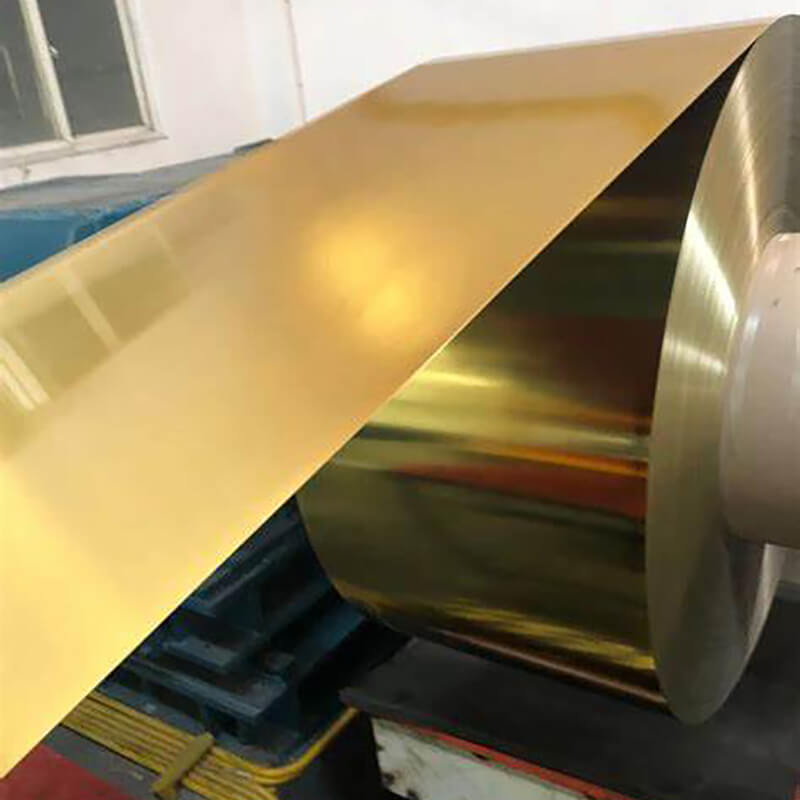
Surface finish describes the texture and reflectivity of the tinplate surface. Each finish suits a different combination of processing and appearance. Bright finish gives a highly reflective surface and works well for visible parts and decorative tins. Stone finish carries a controlled roughness that helps lacquer grip and hides minor marks. Matte finish offers a low-gloss look for applications where glare is unwanted. Silver finish refers to the natural appearance of the tin layer without a special treatment.
| Finish | Surface character | Typical fit |
|---|---|---|
| Bright | Highly reflective, smooth | Visible parts, decorative tins |
| Stone | Controlled roughness | Lacquered interiors, printed bodies |
| Matte | Low gloss | Applications where glare is unwanted |
| Silver | Natural tin appearance | General-line cans and ends |
Passivation and oiling complete the surface package. Passivation forms a thin chemical film that slows oxidation and stabilizes the surface for later processing. Oiling applies a controlled film that protects against corrosion and friction during handling. Ask your supplier to state the passivation treatment and the oil film weight, because both affect welding, lacquering, and printing.
Surface Condition and Printability
Lacquer Adhesion, Defects, and Appearance
Surface condition decides how well your coatings bond to the steel. A uniform, clean surface lets internal lacquer and external inks anchor evenly. Oil films that run too heavy block adhesion, and oil films that run too light leave the surface open to oxidation and scuffing. Passivation films behave the same way: an uneven film creates patches where lacquer fails to grip.
Defects show up in the finished can. Scratches, roll marks, tin nodules, and oxide stains survive printing and lacquering, and they appear on the shelf. Some defects also interrupt the coating film and open a path for corrosion. Inspect incoming lots under consistent lighting and compare them against an agreed reference sample.
Agree on surface requirements before you order. Write the finish, passivation, oil film weight, and acceptable defect limits into the specification. This step protects your printing line and your brand image at the same time.
Surface quality matters for both processing performance and finished-can appearance.
Sheet and Coil Dimensions

Sheets vs. Coils
Supply Format Comparison
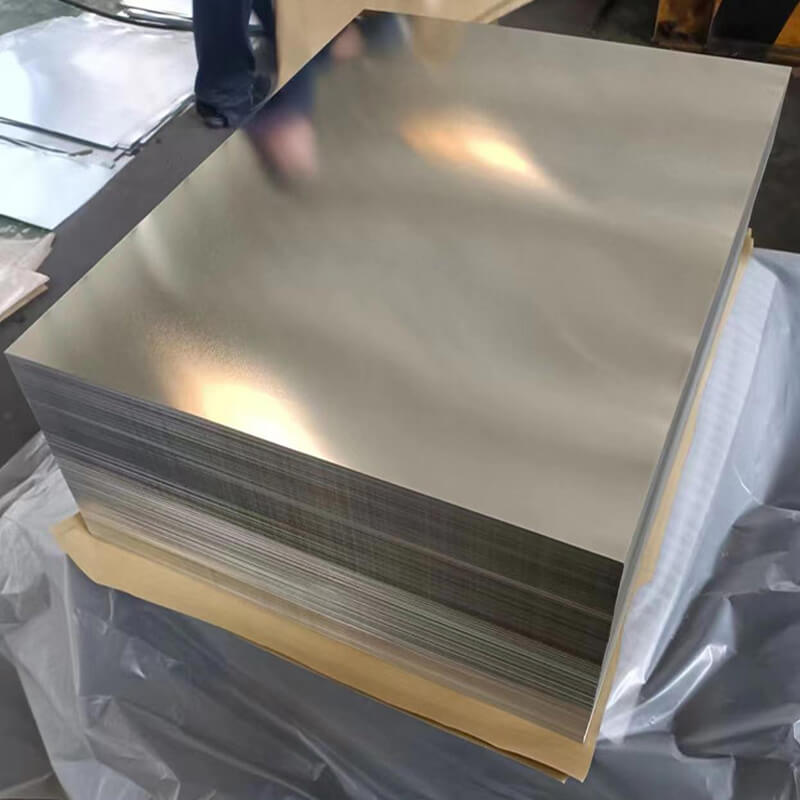
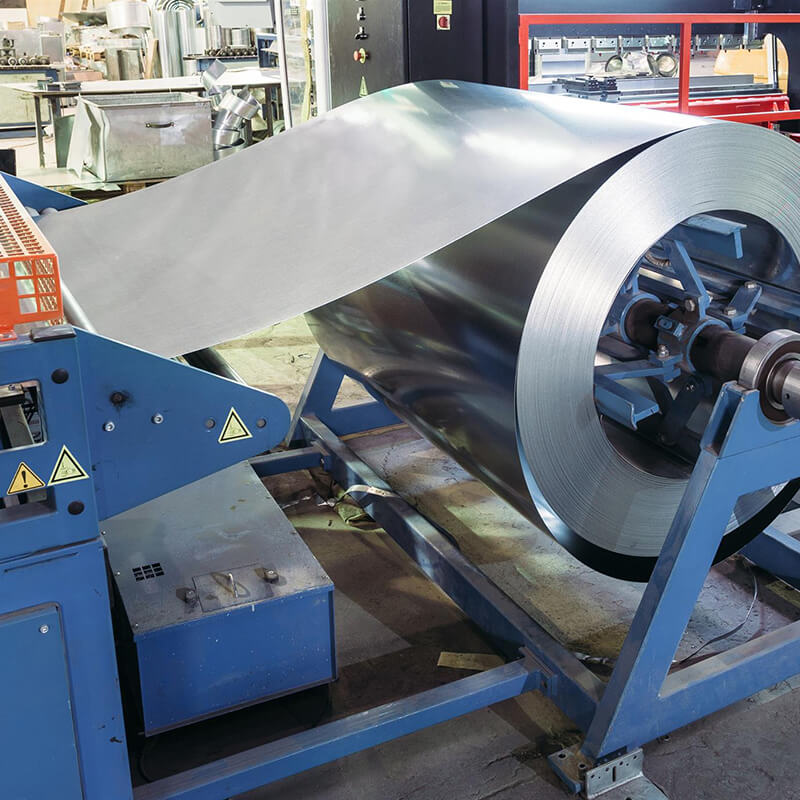
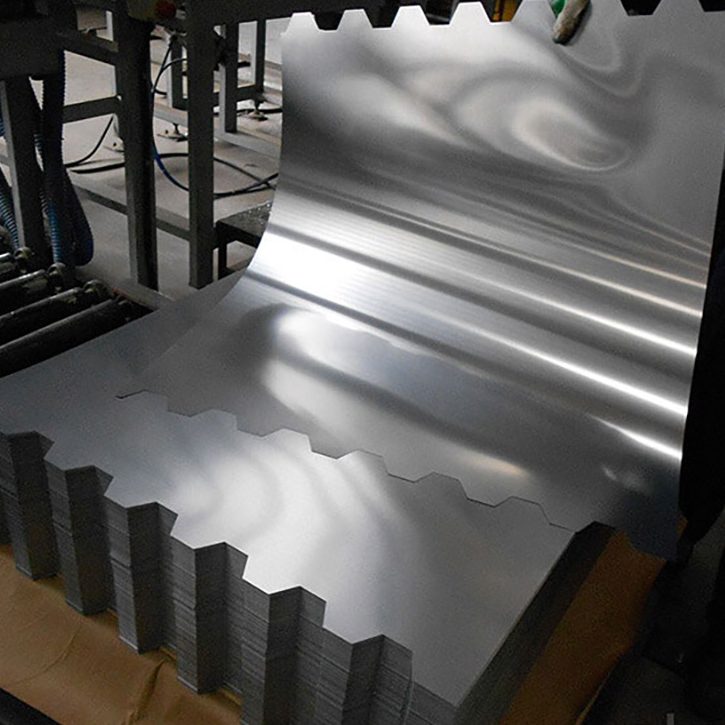
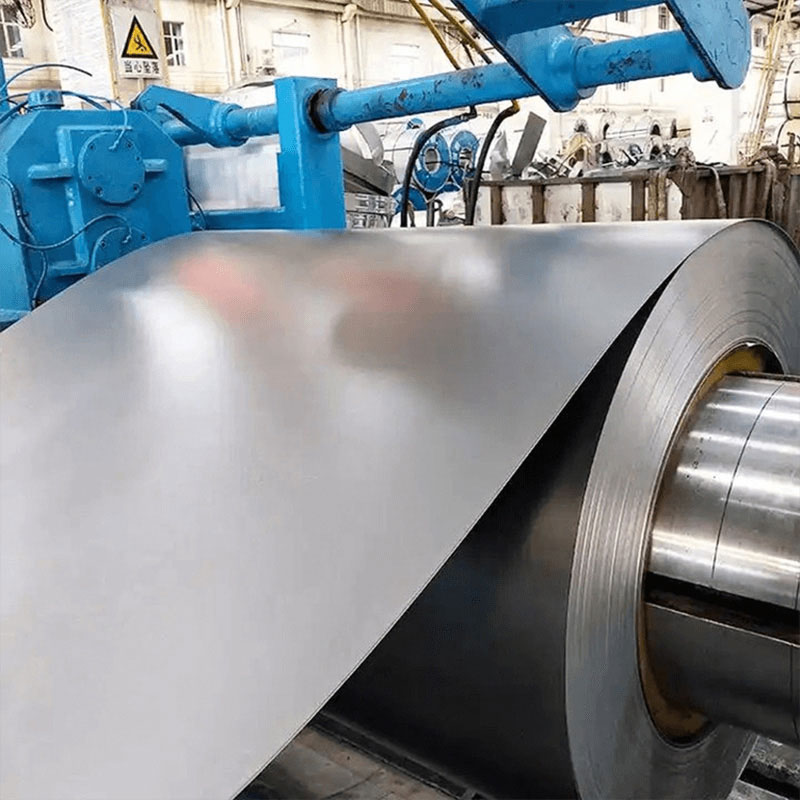
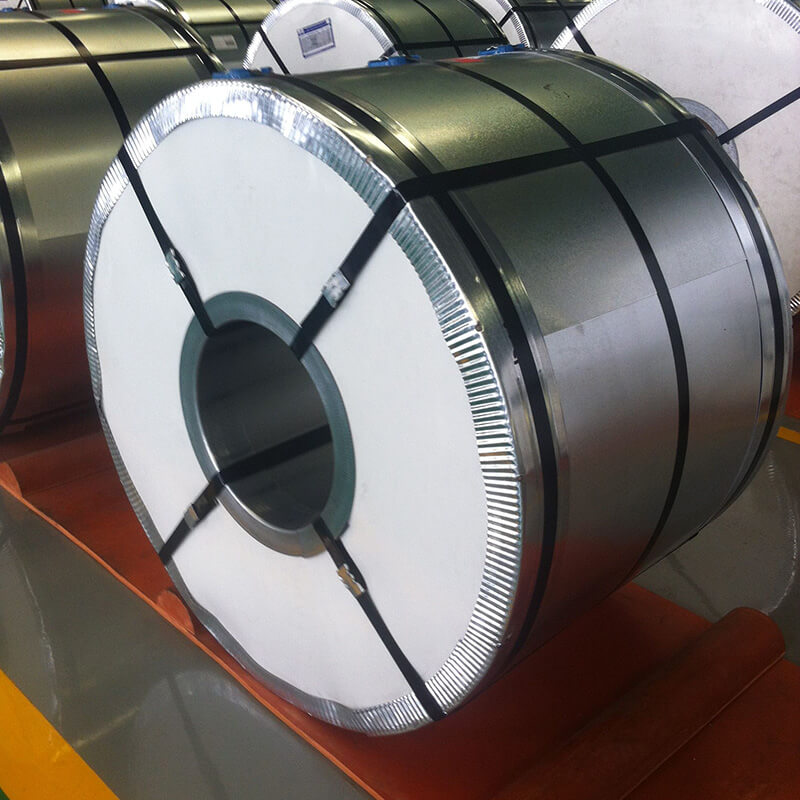
Your feeding and cutting equipment decides whether you buy sheets or coils. A coil feeds continuously into a press or a cut-to-length line. A sheet arrives pre-cut and goes straight to the blanking station or the body former. Neither format is better in general. Each one fits a different production layout.
The table below compares the two formats on the points that matter at the dock and on the line.
| Consideration | Sheets | Coils |
|---|---|---|
| Handling | Flat stacks, forklift and crane friendly | Requires uncoiler and coil car |
| Storage space | Higher footprint per ton | Compact, stacked vertically |
| Line fit | Manual or semi-automatic feeding | Continuous high-speed feeding |
| Cut-to-length | Done at the mill | Done in-house or at a service center |
| Edge exposure | All four edges open to handling damage | Protected until uncoiling |
Coils suit high-volume lines that run continuously. Sheets suit smaller batches, mixed orders, and shops without coil-handling equipment. Tell your supplier which format your line accepts before you discuss anything else. A quotation for the wrong format wastes everyone’s time.
Width, Flatness, and Edge Quality
Slitting, Cut-to-Length, and Coil Inner Diameter
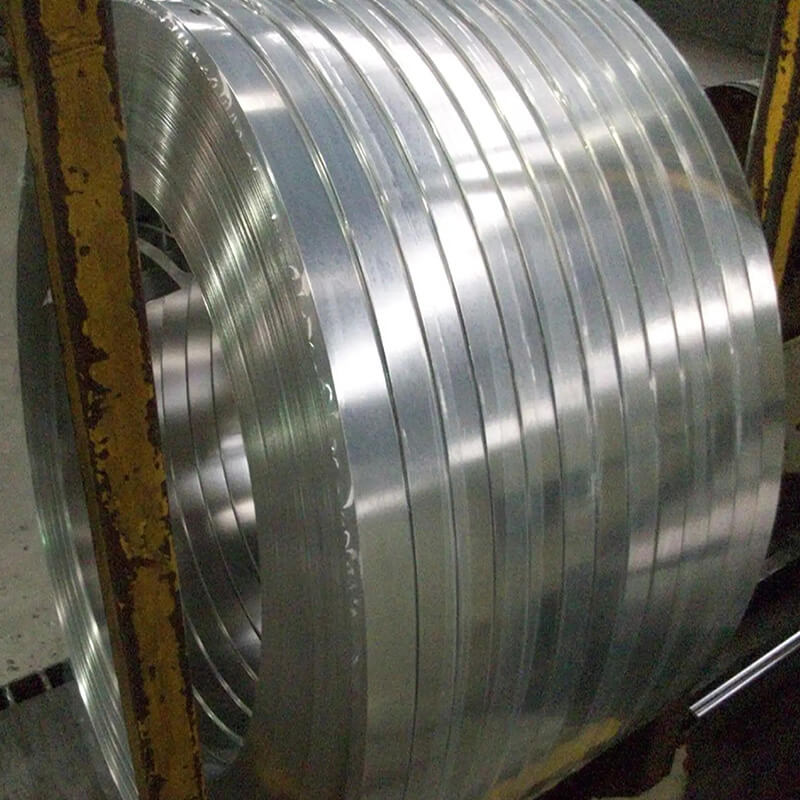
Width tolerance and flatness control how well the material tracks through your equipment. A coil slit to the wrong width jams the guide rails or wanders during welding. Poor flatness causes misfeeds, and it shows up later as distorted can bodies. Ask your supplier to state the width tolerance and the flatness limit in the quotation, and confirm the measuring method behind each figure.
Edge quality deserves equal attention. Slitting burrs catch on guides and scratch adjacent wraps in the coil. A burr at the weld edge can also disturb current flow during welding. Specify the acceptable burr limit and the edge condition you need.
For coils, confirm the inner diameter against your uncoiler mandrel. A mismatch forces you to rewind the coil or change tooling. For cut-to-length sheets, confirm the length tolerance and the squareness of the cut. Both affect blank yield and the accuracy of your first forming station.
Confirm dimensions and tolerances against the actual feeding and cutting equipment. A specification that ignores your line is a specification you cannot use.
Standards, Food Contact Materials, and Bisphenols
Applicable Tinplate Standards
JIS G3303, GB/T 2520, and ASTM Tin Mill Specifications
Tinplate standards define the chemical composition, mechanical properties, coating weights, and dimensional tolerances that a supplier must meet. Three standards appear most often in international quotations. JIS G3303 covers electrolytic tinplate under Japanese industrial rules. GB/T 2520 sets the Chinese national standard for tinplate and black plate. ASTM tin mill product specifications serve buyers in North America and other markets that reference ASTM methods.
Each standard carries its own edition and revision history. Ask your supplier to name the exact standard and edition behind every quotation. A certificate that cites an outdated edition tells you little about current compliance. Confirm that the standard covers the properties you care about, and check whether your target market recognizes it. Some buyers accept multiple standards, while others require one specific reference. Settle this point before you compare prices.
Mill Test Certificates and Traceability
Batch ID, Thickness, Temper, and Coating Records
A mill test certificate ties a delivered lot to the production records behind it. The document should carry a batch or coil identification number, the measured thickness, the temper grade, the coating weight for each surface, and the results of mechanical testing. Ask for the certificate with every shipment, and check that the batch ID matches the coil or sheet pack you receive.
Traceability matters when a problem appears. If a lot fails at the welder or shows coating defects after lacquering, the batch ID lets you trace the material back through the mill’s records. You can then compare the failed lot against earlier lots that performed well. Request retention samples where your volume justifies it. Strong traceability shortens the path from complaint to root cause.
The EU Ban on Bisphenols in Food Contact Materials
What Can Makers Must Confirm With Suppliers
The EU ban on bisphenols in food contact materials sits in Regulation (EU) 2024/3190, which took effect on January 20, 2025. It prohibits the use and trade of BPA, its salts, and other hazardous bisphenols and their derivatives in food contact materials across the EU. The regulation covers adhesives, rubbers, plastics, printing inks, silicones, and varnishes and coatings. That scope reaches metal can coatings and internal coatings directly.
Bisphenols were historically used in internal coatings for metal cans and tubes, where they helped prevent corrosion and contamination. Residues of unreacted bisphenols can migrate into food under heat, acidity, or prolonged storage. This migration into food is the safety concern behind the restriction. BPA and related substances belong to a group often described as endocrine-disrupting chemicals, and regulators now treat them as unsafe in food contact applications at any detectable level.
The bisphenol regulation sets staggered transition dates. Until July 20, 2026, BPA-based food contact articles complying with previous legislation may still be marketed. Single-use articles for preserving fruits, vegetables, and fishery products may be placed on the market until January 20, 2028. The same date applies to articles where a BPA-based varnish or coating covers only the external surface of a metal substrate, and to repeated-use professional food production equipment. Repeated-use articles first placed on the market before July 20, 2026 may continue to be marketed until January 20, 2029.
You must confirm several points with your supplier. Ask which coatings and internal coatings the mill or coater applies, and whether any bisphenols appear in the formulation. Request a declaration of compliance and supporting compliance testing data.
Businesses must identify all bisphenol derivatives in their products and seek safe, compliant alternatives where needed. Epoxy resins based on BPA are a common target of substitution, so ask what replacement system your supplier uses and whether it has been tested for the intended contents. Early compliance planning protects your access to EU markets. Robust documentation from your supplier supports your own declaration. Request technical documentation appropriate to the product and target market, and treat food contact compliance as a specification item, not an afterthought.
Consistency, Delivery, and Trade Remedy Risks
Batch-to-Batch Consistency
Thickness, Temper, Coating, and Traceability
A single good lot proves little. Your line needs the tenth order to perform like the first. Ask the supplier how the mill holds thickness, temper, and coating weight within the same bands across repeat runs. Request the inspection records for several recent batches and compare the measured values side by side. Uniform coating on both surfaces matters as much as the average figure, because differential coating errors surface later at the welder or the lacquer line.
Traceability closes the loop. Each coil or sheet pack should carry a batch ID that links back to mill records for thickness, temper, and coating. When a lot misbehaves, that ID lets you compare it against lots that ran well. Ask for retention samples on repeat orders, and confirm how long the supplier keeps production records. Evaluate the supplier’s ability to maintain consistent specifications across repeat orders, not just its ability to pass a first trial.
Lead Time, Packaging, and Technical Support
Moisture Protection, Export Packing, and Issue Handling
Confirm the quoted lead time in writing, and ask what happens when demand spikes. A supplier that plans capacity around repeat customers protects your schedule better than one that quotes short and delivers late. Packaging deserves the same scrutiny. Tinplate travels by sea, and moisture is its main enemy. Ask how the supplier wraps coils, whether it uses vapor-phase protection, and how it secures edges against handling damage. Export packing should suit your climate and your unloading equipment.
Settle the sample and trial policy early. Ask for sample lead time, sample cost, and whether the supplier supports a trial run on your line. A supplier that backs a small trial lot with technical staff gives you a faster path to approval. Agree on the claims process too: who investigates, what evidence you submit, and how the supplier issues credit or replacement.
Trade Remedy Risks in Tinplate Sourcing
Duties, Origin, and Quotation Stability
Trade remedy risks can move your landed cost after you sign. Duties apply by origin and by product scope, and the scope rules are not always obvious. Malaysia’s anti-dumping review of cold-rolled coils above 1,300 mm width, for example, explicitly excludes cold-rolled blackplate intended for tinplate production. That exclusion means no anti-dumping duties apply to that input from Vietnam. Read the scope language, not just the headline duty rate.
Origin planning carries its own anti-circumvention risk. Vietnam’s tinplate exports to the EU climbed to USD 67.7 million, up 61%, capturing a 7.3% import share in a market that imposes anti-dumping duties on Chinese-origin tinplate. To limit anti-circumvention exposure, TRAV recommends exporters steer clear of key inputs sourced from China. Build origin questions into your tinplate sales discussions, and keep robust documentation of where each input comes from. Stable quotations depend on stable origin.
Evaluate the supplier’s ability to maintain consistent specifications across repeat orders.
Real Cost per Finished Can

Why Low Price per Ton Can Mislead
Scrap, Rework, Downtime, and Rejection Rates
A low price per ton only tells you what you pay at the dock. It says nothing about what the material costs you once it reaches the line. Cheap tinplate that cracks at the drawn corner, welds poorly, or drifts in gauge turns a saving into a loss. You pay again through scrap, rework, and lost output.
Track where the money goes. Every rejected body carries the full cost of the material plus the labor and energy already spent on it. Rework adds handling and inspection time. Downtime compounds the damage, because a stopped line still burns overhead while your team adjusts tools or clears jams. A higher rejection rate quietly erases any gain from a lower ton price.
Comparing Quotations Fairly
Material Cost per Acceptable Finished Can
Compare suppliers on a common basis. Calculate material cost per acceptable finished can: divide the total material cost of a production run by the number of cans that pass inspection. This figure captures scrap and rejection in one number, and it lets you rank quotations that look different on paper. Treat it as one component of total manufacturing cost, not the whole picture. Labor, energy, coatings, and overhead still sit outside it.
Build warranty and return terms into the same comparison. Ask how the supplier handles a claim: who investigates, what evidence you submit, and how quickly you receive a credit or replacement. Confirm the credit terms in writing. A supplier that supports root-cause analysis helps you fix the problem at its source instead of absorbing repeat losses. A supplier that deflects claims leaves you carrying the cost.
Compare suppliers on material suitability and overall production performance, not price alone.
Application and process define specifications. Confirm thickness, temper, coating, surface, and dimensions against production conditions. The 10 questions can manufacturers should ask before buying tinplate become a scored RFQ checklist. Food contact materials compliance belongs in every supplier review. Food contact materials compliance rules cover BPA lacquers, BPA coatings, BPA inks, BPA adhesives, BPA sealants, BPA compounds, BPA varnishes, BPA residues, BPA migration, and BPA declarations. Ask about bisphenols limits, bisphenols testing, bisphenols documentation, bisphenols alternatives, and bisphenols screening. Safety and compliance guide approval. Revisit the 10 questions can manufacturers should ask before buying tinplate. Food contact materials safety and compliance matter. Share specifications with Witop Tinplate for review.
FAQ
What thickness of tinplate do food cans typically use?
Thickness depends on can size, body or end use, and your forming route. The article gives no single figure, and no universal value exists. Ask your supplier to quote a nominal gauge plus a tolerance band that matches your welder and seamer.
How does single-reduced tinplate differ from double-reduced?
Single-reduced tinplate takes one cold-reduction pass and offers wider elongation for forming. Double-reduced tinplate takes a second pass, which raises strength at a lighter gauge. Ends and lids often suit DR grades, while drawn bodies often suit SR grades.
Does a heavier tin coating always resist corrosion better?
Not automatically. More tin can improve protection against aggressive contents, yet it raises cost and may disturb welding. Internal lacquer and the packaged product also shape performance. Confirm the coating weight for each side against your actual application.
What should I send with a tinplate quotation request?
Send the can type and forming process, nominal thickness with tolerance, temper grade, coating weight per side, surface finish, passivation and oiling requirements, sheet or coil dimensions, and the standard you want cited. Add any food contact documentation your market requires.
Do I need to ask about BPA in can coatings?
Yes, if you sell into the EU. Regulation (EU) 2024/3190 restricts BPA and related substances in food contact materials, and its scope reaches metal can coatings and internal lacquers. Ask which coating system your supplier applies and request a declaration of compliance.
Which documents should accompany each shipment?
Request a mill test certificate carrying the batch or coil ID, measured thickness, temper grade, coating weight for both surfaces, and mechanical test results. Check that the batch ID matches the pack you receive, so you can trace any problem back to mill records.
Why can two quotations at the same ton price perform differently?
Temper, coating weight, surface condition, and thickness consistency all vary between suppliers. A cheaper lot may crack, weld poorly, or drift in gauge, and scrap erases the saving. Compare material cost per acceptable finished can instead of price per ton alone.
Is a trial run necessary when I change suppliers?
Yes. A new supplier introduces new variables at welding, drawing, flanging, and seaming. Run a small trial lot on your own equipment, measure the results against your target dimensions, and scale up only after the trial passes.