Skip to content


Key Highlights
- Tinplate strip Coil slitting turns a wide master coil into exact strip widths for downstream production.
- Width tolerances matter because small variation can affect feeding, alignment, and finished parts.
- The slitting process depends on setup accuracy, rotary knives, knife clearance, and edge quality.
- Poor control can raise scrap, rework, and production delays across coil processing operations.
- Narrower strips often need closer attention to winding, camber, and consistency from coil to coil.
- Buyers should review more than width alone, including edge condition and overall quality assurance.
Introduction
A purchase order may specify 50 mm wide tinplate strip, but for a fast production line, that number alone is not enough. In coil slitting and steel slitting, width tolerance, burrs, edge condition, camber, and winding quality can all affect how material runs in the next process. For manufacturers buying slit tinplate, width tolerance is not just a dimensional note. It can influence material use, line stability, tooling alignment, and the consistency of finished components.
Understanding Tinplate Coil Slitting
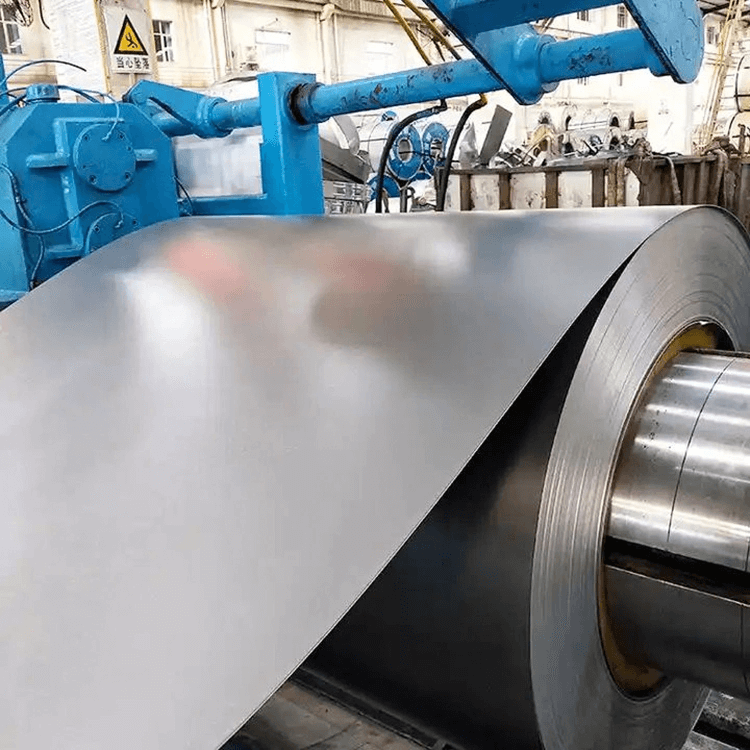
Tinplate strip coil slitting is the slitting process used to cut a wide master coil into multiple narrower strips at required strip widths. The material is fed through a slitting line, cut lengthwise, and then rewound into tinplate strip coils for later use.
For buyers, this matters because the target width must match the downstream application. A 1000 mm master coil may be divided into custom widths such as 50, 100, 200, or 250 mm, depending on customer specification, edge trim, and equipment capability. That sets up the next question: how the process actually works.

The Tinplate Coil Slitting Process Step by Step
Here is the basic slitting process in simple terms. A master coil is loaded onto a decoiler and fed forward under tension. As the strip moves through the slitting line, rotary knives cut the material lengthwise into the planned strip widths. The slit material is then rewound into separate coils for shipment or later use.
In practice, width control depends on setup accuracy before and during the run. Knife clearance, tooling condition, and machine condition all play a big part in the equation. If these variables are not controlled, width variation and edge damage may appear.
Key steps usually include:
- Loading the master coil
- Feeding the strip through the line
- Cutting with rotary knives
- Checking knife clearance and setup accuracy
- Rewinding into narrower coils
Why Manufacturers and Suppliers Use Tinplate Coil Slitting
Many factories do not want to buy wide coils and process them in-house. They need narrower strips ready for stamping, forming, or component making. Coil processing solves that problem by supplying custom widths that fit the next production step more closely.
This helps production efficiency in two ways. First, the customer receives material closer to the final working width. Second, the plant may reduce extra handling, internal setup time, and additional cutting work. For companies without slitting capacity, buying slit tinplate coil can simplify planning.
The need is not limited to can makers. Can component manufacturers, lid producers, crown cap and closure makers, aerosol component plants, metal stamping factories, engine gasket makers, and electrical or electronic component producers may all need slit material with controlled strip widths. Next, it helps to define width tolerance clearly.
Defining Tinplate Strip Width Tolerance
Width tolerances explain how much the actual strip widths may vary from the nominal target width. In coil processing, that means a buyer should not specify only the target dimension. The permitted range matters too.
Put simply, nominal width is the intended size, actual width is the measured result, and width tolerances define the allowed difference between the two. The required tolerance should be agreed according to the applicable standard, strip dimensions, downstream process, and customer specification. With that definition in place, the topic becomes much easier to evaluate.
What Is Width Tolerance in Tinplate Slitting?
When you order slit tinplate, asking for exact strip widths without stating the allowed variation can create gaps in the specification. A nominal width of 100 mm tells the supplier the target. It does not, by itself, define what result is acceptable under quality standards.
That is where width tolerances come in. They describe how far the actual measured width may differ from the target value. In practical terms, buyers should think in three parts: nominal width, actual width, and permitted variation. This is the basis for a useful slitting requirement.
There is no single value that should be treated as universal for all tinplate strip. Different rules may apply depending on strip widths, material thickness, application, equipment capability, and customer requirement. For that reason, the correct tolerance should be agreed before production starts.
Factors That Influence Tinplate Strip Width Tolerance
Several variables affect whether a slit tinplate coil meets the ordered width. Some come from the material itself, and some come from the setup. Even when the target strip widths stay the same, the result can change if the material or machine conditions change.
Material thickness and mechanical properties are especially important. Different metals, different sources, and even different coil thickness levels may react differently during metal slitting. The compiled information also shows that the thinner the metal, the harder it can be to achieve the correct clearance in some cases.
Important factors include:
- Material thickness and coil thickness
- Mechanical properties of the strip
- Knife clearance and setup accuracy
- Tooling wear or damage
- Edge quality and condition of the machinery
Because these factors interact, width control is not just a measuring task. It is a process control issue.
The Importance of Width Tolerance in Tinplate Slitting
Why is width tolerance important in tinplate strip coil slitting? Because small dimensional changes can become repeated production problems when thousands of parts are made continuously. Good quality assurance supports stable output, better fit with tools, and more predictable downstream results.
Tight tolerances are not just a technical preference. They can support production efficiency by reducing interruptions, setup changes, and uncertainty from coil to coil. To see why, it helps to look at feeding behavior first and then at tooling and finished parts.
Stable Feeding and Production Line Performance
On a production line, strip width affects how the material enters guides, feeds, and forming areas. If width variation appears from coil to coil or within a coil, stable feeding may become harder to maintain. That is especially important for high-speed lines and stamping presses.

A strip that runs wider than expected may create interference or tighter guide conditions, depending on the process. A strip that runs narrower may affect positioning or feeding behavior. The exact impact depends on equipment design, strip geometry, and line settings, but the risk increases when variation repeats over long runs.
This is why buyers should think beyond one acceptable coil. Consistency across narrower coils and across batches matters. A line that runs well today but needs adjustment on the next coil can lose time, reduce output stability, and create avoidable uncertainty in production planning.
Impact on Tooling, Die Alignment, and Finished Components
In stamping, pressing, and forming, strip width has to match the full path from guide to feed to die. That is why tooling and die alignment depend on correct tolerances. If the incoming material does not match the planned width window, the process may not behave the same way every time.
If the strip is wider than expected, feeding interference or tool contact may occur, depending on the setup. If it is narrower, there may be positioning issues, reduced forming allowance, or dimensional change in the finished components. These are not automatic outcomes in every case, but they are real process concerns.
The effect can be more visible in small stamped parts, engine gasket components, and other precision-sensitive applications. Width change in the strip may carry into part positioning, edge allowance, forming geometry, or scrap layout. That leads naturally into the broader production risks of poor tolerance control.
Production and Quality Risks of Poor Width Tolerance
Poor tolerance creates more than a measurement issue. It can increase quality risks across feeding, forming, rewinding, and final part acceptance. Width variation often appears alongside other slitting problems such as burrs, camber, knife marks, or edge damage.
For purchasing teams, the concern is not just the price per ton. It is how much acceptable output each ton can produce. The following sections look at the most common production issues first, then at material utilization, scrap rates, and rework.
Common Issues Caused by Improper Tinplate Strip Width Tolerance
When tinplate strip coil slitting does not meet width tolerance standards, the problem may not stay limited to one dimension. The compiled information shows that slitting problems often show up first at the edge. That is why edge quality is a useful checkpoint when width performance is in doubt.
A bad edge may indicate setup issues such as incorrect knife clearance, worn tooling, or poor stripper ring practice. Once those conditions appear, the strip may show multiple defects at the same time, not just width error.
Common issues include:
- Bad edge or rough fracture
- Edge wave
- Deep knife marks
- Edge burr
- Camber
- Width out of specification
These conditions can reduce confidence in coil processing and make downstream performance less predictable. In many cases, the edge is the first place to inspect.
Material Utilization, Scrap Rates, and Rework Concerns
A narrow strip purchase should be evaluated by usable output, not only by the ton price. If width control is inconsistent, material utilization may fall because more strip has to be trimmed, rejected, or handled outside the normal process. That can raise scrap rates and create hidden cost.
Rework is another concern. If a coil runs differently from the one before it, operators may spend time adjusting guides, tooling, or line settings. That interrupts coil processing and can slow the whole shift. For plants running at high speeds, even small delays matter.
This is why good slitting precision should be viewed as part of yield, not just as a processing detail. Better width control can support more stable output, lower rework, and more predictable use of each coil in production.
How Width Tolerance Is Controlled in Tinplate Coil Slitting
Width tolerances are controlled through setup, inspection, and disciplined operation of the slitting line. Good quality assurance does not depend on one measurement alone. It depends on controlling the main variables that influence the cut.
That includes the right tooling, correct knife clearance, machine condition, and technical expertise during the run. Since width performance is linked to edge condition and stability, the process has to be managed as a whole. The next two sections show the practical controls that support tighter results.
Key Steps and Quality Control Methods in the Slitting Process
Good control starts before the strip is cut. The slitting process needs a correct setup, followed by measurement and inspection during production. Width checks should be supported by edge review, because poor edges often point to clearance or tooling issues that can also affect dimension.

Inspection should not stop with one coil. Buyers who rely on repeat runs should care about coil-to-coil consistency as much as single-coil acceptance. That is part of practical quality control for any slitting line supplying precision strip widths.
| Slitting factor | Possible downstream impact |
|---|---|
| Width variation | Feeding instability, positioning issues |
| Edge burr | Tool wear, handling concerns |
| Edge condition | Forming or stamping inconsistency |
| Camber | Tracking and alignment problems |
| Winding alignment | Rewinding stability and handling issues |
| Surface scratches | Surface finish concerns |
| Coil tension | Coil stability during use |
| Strip flatness | Feeding and forming performance |
Equipment and Operator Practices for Tighter Tolerances
Even the best tooling cannot overcome poor machine condition or weak setup discipline. The compiled material makes that clear. Tighter tolerances depend on several connected practices, from knife condition to arbor accuracy to how operators respond during the run.
Operator skill matters because there are different rules for different metals, thicknesses, and setups. Recording results, checking the edge, and adjusting based on actual performance help improve repeatability. Long production runs need the same attention, not just a good start.
Helpful practices include:
- Use best tooling in good condition
- Set and verify knife clearance carefully
- Apply correct stripper rings and correct stripper ring practice
- Maintain the condition of machinery
- Monitor results and inspect throughout the run
When these basics are controlled, width performance is more likely to stay consistent over time.
Frequently Asked Questions (FAQ) about Tinplate Coil Slitting and Width Tolerance
What are the common questions regarding tinplate coil slitting and width tolerance? For instance, many often wonder how width tolerances impact the efficiency of slitting lines. Understanding that tight tolerances can enhance edge quality and minimize slitting problems is key. Another frequent inquiry relates to how variations in strip widths may affect downstream processes, particularly in high-speed production environments. Lastly, customers often seek clarity on industry standards for acceptable tolerances and their influence on overall product quality and performance.
Which industries need precise width tolerance in tinplate strip coil slitting?
Industries that use slit tinplate directly in production often need tight width tolerances. This can include can component makers, lid and closure manufacturers, aerosol part producers, metal stamping plants, engine gasket manufacturers, and electrical component factories where coil processing, steel slitting, and quality assurance must support repeatable production under application-specific industry standards.
What equipment features help improve width tolerance in tinplate slitting?
A capable slitting line, sharp and well-maintained tooling, accurate setup parts, and proper knife clearance all help improve width control. Just as important, technical expertise and machine maintenance support tight tolerances, because worn or damaged equipment can change the result even when the target strip width stays the same.
Are there best practices to maintain width tolerance during long production runs?
Yes. Good practice includes verifying knife clearance, using sound tooling, inspecting edge condition, recording results, and monitoring consistency from coil to coil. These steps support production efficiency and quality standards, especially when customers need tighter tolerances over long runs rather than acceptable results on only the first coil.
Conclusion
In conclusion, understanding width tolerance in tinplate strip coil slitting is essential for manufacturers aiming to optimize production efficiency and product quality. Proper width tolerance ensures stable feeding into machinery, precise tooling alignment, and ultimately leads to consistent finished components. A lack of attention to these details can result in higher scrap rates and increased rework, impacting the bottom line. By implementing rigorous quality control measures and best practices, manufacturers can mitigate risks and enhance overall productivity. If you’re ready to improve your production processes and ensure top-notch quality, get quotes from our experts today!
Frequently Asked Questions
What is tinplate coil slitting?
Tinplate coil slitting is the slitting process of cutting a wide master coil lengthwise into smaller strip widths, then rewinding them into separate coils. The goal is to supply material closer to the customer’s required width while maintaining acceptable edge quality for downstream stamping, forming, or other production use.
What is the width tolerance of tinplate strip?
The width tolerance of tinplate strip is the permitted variation between the nominal ordered width and the actual measured width after the slitting line process. There is no single value for all jobs. Tight tolerances depend on strip widths, application, equipment capability, customer specification, and applicable industry standards.
Why does width tolerance matter in stamping?
Width tolerance matters in stamping because incoming strip width affects feeding, guide position, and die alignment in stamping presses. Correct tolerances can support more stable production and more consistent finished components. When variation appears, quality standards may be harder to maintain, especially if edge quality also changes.
What causes burrs during tinplate slitting?
Burrs during the slitting process are commonly linked to incorrect knife clearance, dull knives, or excessive overlap. These conditions can create edge damage and a bad edge instead of a clean cut. In coil processing, burr is often one of the first signs that the setup needs correction.
How is tinplate strip width measured?
Tinplate strip width is measured as part of quality control and inspection after setup and during production on the slitting line. Buyers should focus on actual measured strip widths compared with the nominal ordered width and permitted tolerance, while also checking related factors such as edge condition and consistency.
Can tinplate be slit into narrow coils?
Yes. A master coil can be processed by steel slitting into narrower coils and custom widths based on customer needs. The slitting process is commonly used to create narrow tinplate strip for downstream manufacturing, though narrower coils may require closer attention to width control, winding, and overall slitting quality.
What information should I provide when ordering tinplate strip?
When ordering tinplate strip, provide the nominal strip widths, permitted tolerance, coil thickness, and any correct specification related to downstream use. It also helps to define surface finish, mechanical properties, and other requirements that may affect slitting performance, rewinding, and suitability for your production process.